
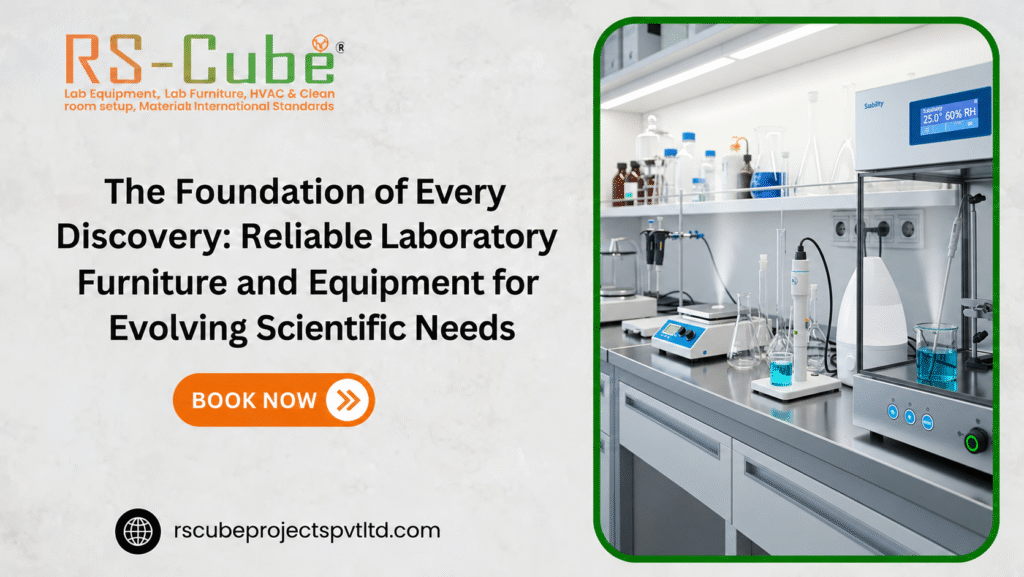
Every experiment, observation, and breakthrough begins in a space where precision and patience blend, and curiosity sparks new knowledge. A laboratory is not just a room of instruments; it is a vibrant environment where ideas come alive, possibilities unfold, and the future is quietly crafted.
As science advances in 2026, laboratories need more than just standard furniture and equipment. They require smart planning, resilient materials, efficient layouts, and dependable solutions that support accuracy, safety, and seamless research. Whether in schools, hospitals, research centers, or pharmaceutical labs, every scientific space deserves infrastructure as thoughtfully designed as the minds at work within it.
RS Cube recognizes that great laboratories balance functionality, durability, and modern design. By specializing in laboratory furniture and equipment, the company ensures every workstation, storage unit, and essential component helps create a more organized and productive environment.
Best Laboratory Furniture Supplier: Designing Spaces That Support Scientific Excellence
A well-designed laboratory is never a matter of chance. It comes from a clear understanding of movement, workflow, safety, and the daily challenges researchers face. Furniture should support specialized tasks, endure constant use, and foster an environment where focus thrives, free from needless distractions.
Selecting the best laboratory furniture supplier goes beyond looks; it means considering how each piece performs over time. Furniture should support practical work, remain strong, be easy to maintain, and adapt to the needs of various scientific fields.
Modern laboratory furniture includes workbenches, tables, storage cabinets, equipment platforms, reagent units, and specialized workstations. Each serves a unique role, but together they form a unified environment. Well-planned arrangements let researchers access materials quickly, keep workspaces organized, and reduce wasted movement during complex tasks.
The Art of Combining Durability With Intelligent Design
Laboratory furniture faces challenges that ordinary office furniture never sees. Surfaces might need to resist chemicals, moisture, constant cleaning, mechanical stress, and frequent handling. Choosing the right materials and finishes is key to lasting performance.
A well-designed laboratory puts ergonomics first. Proper working heights, easy-to-reach storage, enough legroom, and smart equipment placement help professionals stay comfortable during long research hours. Addressing these details early makes the lab easier to use and maintain.
Adaptability is just as important. As technology evolves and research priorities shift, modular furniture, flexible workstations, and easy access to services make future changes easier. Designing with tomorrow in mind ensures laboratories stay ready for new possibilities.
Laboratory Furniture Solutions for Different Scientific Environments
Each laboratory has a unique purpose, and its infrastructure should mirror that identity. Educational labs need practical workstations for demonstrations and hands-on learning. Pharmaceutical labs need tailored storage and surfaces to support their processes. Industrial testing facilities focus on sturdy construction, equipment integration, and smooth material handling.
Healthcare and diagnostic labs need layouts that support smooth workflows, easy cleaning, and quick access to vital instruments. Research labs thrive with flexible setups that adapt to new projects and specialized tools.
A skilled supplier helps customers choose the right furniture types, materials, layouts, and features for their needs. The goal is not just to fill a space, but to create an environment where space, equipment, and expertise work in harmony.
Laboratory Equipment Supplier: Bringing Precision and Performance Into Every Experiment
While furniture forms the foundation, laboratory equipment turns curiosity into measurable knowledge. Instruments let professionals see beyond the visible, analyze samples, compare results, and explore the principles that shape our world.
Choosing a reliable laboratory equipment supplier is crucial for institutions that value consistency, efficiency, and wise investment. Equipment should fit its purpose, integrate with existing procedures, and include clear documentation, installation support, and maintenance when needed.
Laboratory equipment covers a wide array of tools: analytical instruments, microscopes, balances, heaters, centrifuges, measuring devices, sample prep tools, and more. The right choice depends on the work, accuracy needed, conditions, and industry standards.
Why Equipment Selection Deserves Careful Consideration
Laboratory equipment is valuable for more than its specs. Reliability, ease of use, calibration needs, consumable availability, and access to service all shape its long-term value.
Before buying equipment, labs should clarify their testing needs and required performance features. Knowing measurement ranges, accuracy, throughput, conditions, and system compatibility helps avoid poor choices.
Maintenance and calibration are just as important. Equipment for measurements or regulated tests often needs regular calibration, performance checks, and documented upkeep. These steps help labs trust their results and catch issues before they affect critical work.
Equally significant is user training. Even a sophisticated instrument delivers limited value when operators do not understand its functions, limitations, and correct handling procedures. Clear operating instructions, appropriate training, and established laboratory protocols support safer, more consistent practices.
Building a Complete Laboratory Through Integrated Solutions
Furniture and equipment are closely connected and shouldn’t be chosen in isolation. Their relationship shapes how well a laboratory functions. A large instrument may need a sturdy workbench, reliable power, adequate ventilation, or specific conditions. Storage must fit daily materials, and work surfaces should support every task.
Coordinating these requirements early can reduce installation challenges, improve accessibility, and create a more logical workflow. It also helps organizations plan their budgets more effectively by considering infrastructure, equipment, installation, and future maintenance together.
When choosing a supplier, buyers should weigh product fit, technical details, communication, delivery planning, and after-sales support. Open conversations about needs help ensure purchases truly match the lab’s requirements.
What Makes a Modern Laboratory More Efficient and Future-Ready?
Great ideas drive scientific progress, but the right environment determines how far they go. A modern laboratory should support today’s work while adapting to shifting research needs, new technologies, and smarter resource use. These guiding principles help organizations design laboratories that remain practical and productive for years.
- Purpose-driven planning: Select furniture and equipment based on specific testing activities, workflow requirements, and the materials handled.
- Safety-conscious design: Consider appropriate storage, ventilation, clear access routes, suitable surfaces, and application-specific safety requirements.
- Long-term durability: Evaluate construction quality, material compatibility, maintenance needs, and expected service life before making purchasing decisions.
- Adaptability and organization: Choose practical layouts and suitable storage systems that support efficient movement and accommodate future operational changes.
These principles offer a strong foundation for institutions building new labs or upgrading old ones. Success comes from careful planning, expert advice, and meeting all safety standards.
Why Choosing the Right Laboratory Partner Matters
A laboratory supplier shapes decisions that impact daily operations for years. Their value comes from understanding needs, clearly explaining products, and guiding buyers to smart choices beyond just price or looks.
Customers should check if solutions fit their needs and if technical specs are available. They should also confirm delivery times, installation roles, warranties, maintenance plans, and any product limits. RS Cube sees laboratory infrastructure as the backbone of reliable science. By uniting furniture and equipment needs, they help organizations focus on the practical details that make a laboratory truly work.
For new facilities, this means assessing space, choosing key equipment, picking the right work surfaces, and organizing storage. For existing labs, it could involve updating furniture, improving workstations, or adding equipment for new tests. The most effective solution responds to the laboratory’s actual needs while considering safety, usability, quality, and long-term operational value.
Conclusion: Where Thoughtful Infrastructure Meets the Promise of Discovery
A laboratory is where precision turns into practice and curiosity grows into understanding. Furniture brings order, equipment drives discovery, and the environment supports those seeking answers. Every chosen workstation and instrument serves a greater goal: building a space where science moves forward with confidence.
In 2026, demand for smart laboratory infrastructure grows as education, healthcare, industry, and research advance. Organizations that invest in the right furniture, reliable equipment, and careful planning build spaces that serve teams well and adapt to new challenges.
Choosing the right supplier is therefore not merely a purchasing decision. It is an investment in the everyday conditions that support accuracy, organization, and scientific progress. When you select infrastructure with care, the laboratory becomes more than a workspace; it becomes the foundation on which tomorrow’s discoveries can be built.
Faq
Q1. What should I look for when choosing a laboratory furniture supplier?
A1. Look for durable construction, suitable materials, application-specific designs, practical storage options, technical guidance, and clear information about delivery, installation, and warranty conditions. The supplier should understand your laboratory’s operational requirements.
Q2. Why is specialised laboratory furniture important?
A2. Specialised laboratory furniture is designed to accommodate scientific workflows and demanding working conditions. Depending on its intended use, it can provide chemical-resistant surfaces, organised storage, stable workstations, and easier cleaning and maintenance.
Q3. What types of laboratory furniture are commonly required?
A3. Common options include laboratory workbenches, worktables, storage cabinets, reagent cabinets, equipment tables, sinks, shelving, and specialised workstations. The exact selection depends on the laboratory’s purpose and applicable safety requirements.
Q4. How do I select the right laboratory equipment supplier?
A4. Evaluate product specifications, suitability for your testing requirements, quality documentation, calibration needs, service availability, warranty terms, and technical support. Compare solutions based on long-term suitability rather than price alone.
Q5. What laboratory equipment is essential for a new laboratory?
A5. Essential equipment varies by discipline. Depending on the application, a laboratory may require balances, microscopes, measuring instruments, centrifuges, heating devices, sample preparation tools, and specialised analytical equipment.