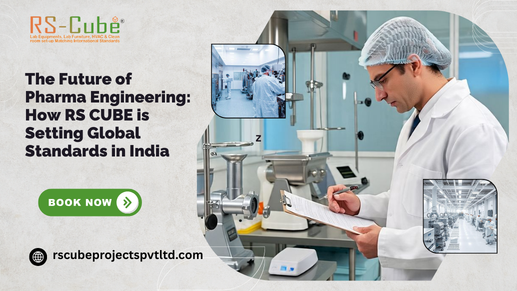
India is recognized as a leader in global medicine, often called the “Pharmacy of the World.” Its pharmaceutical industry supplies essential medications worldwide. Beyond export growth and innovation, the industry relies on a precise infrastructure where even a microscopic particle can compromise an entire batch, and air quality is as critical as the medicines themselves.
RS CUBE has become a trusted name in modern drug manufacturing. Through strategic planning and technical expertise, RS CUBE supports Indian manufacturers in evolving from volume-driven operations to recognized centers of scientific excellence.
The Strategic Compass: The Role of Pharmaceutical Consultants in India
Successfully operating in 2026 requires more than capital; it demands a clear strategy. Emerging and expanding drug firms face a complex array of global regulations. Meeting the requirements of the USFDA, WHO-GMP, and the European Medicines Agency (EMA) involves extensive audits and inspections.
Pharmaceutical Consultants in India are not merely advisors; they are strategic architects whose role begins well before construction. They design facilities that are “audit-ready” from day one by mapping personnel and material flows to prevent contamination—a critical requirement for export-quality production.
2. Navigating the Data Integrity Maze
In 2026, regulators aren’t just looking at the product; they also assess the supporting data. Consultants help firms implement ALCOA+ (Attributable, Legible, Contemporaneous, Original, and Accurate) principles in daily operations. By digitizing quality management systems, firms move from paper records to secure cloud environments. Actuaries are Essential.
While a strategy guides a pharmaceutical plant, the Heating, Ventilation, and Air Conditioning (HVAC) system is essential for maintaining cleanroom standards. Unlike standard offices, where air conditioning provides comfort, in pharmaceutical cleanrooms, it is a critical utility. HVAC failures can result in significant regulatory issues.
Selecting HVAC clean room equipment manufacturers is a critical technical decision. A cleanroom must precisely control pressure, temperature, and humidity.
The Anatomy of a High-Performance Cleanroom System
- Pressure cascades regulate airflow: air moves from clean zones, like aseptic filling, to less-clean zones, such as packaging. Positive pressure ensures outward airflow when doors open, preventing dust from entering.
- HEPA filters trap 99.997% of particles down to 0.3 μm. For biologics, ULPA filters capture even smaller contaminants, including some viruses.
- Pharmaceutical powders absorb moisture easily. Without precise humidity control, clumping can occur, causing incorrect dosing or clogged equipment.
Sustainable Purity: The Green Revolution in Pharma Engineering
By the mid-2020s, sustainability will be essential. Cleanrooms, requiring strong air circulation and filtration to maintain ISO Class 5 or 7, use up to 60% of a facility’s energy.
Pharmaceutical consultants support Demand-Controlled Ventilation (DCV). Particle sensors let HVAC systems cut back operation during low demand, saving energy while maintaining standards.
Innovative Green Technologies:
- Energy recovery wheels transfer heat from exhaust to incoming air, lowering HVAC energy needs.
- Variable Frequency Drives (VFDs) adjust motor speeds as needed, saving energy and reducing wear.
The Human Element: Bridging the Talent Gap
Technology alone isn’t enough—a plant depends on skilled people. RS CUBE finds a skills gap: although India has many graduates, few have expertise in maintaining complex HVAC or validation systems.
The role of a brand today has expanded into education. Leading Pharmaceutical Consultants in India now offer immersive training modules for plant staff. These aren’t just boring lectures; they are “Live-Run” simulations where technicians learn how to enter a cleanroom without shedding skin cells, calibrate sensors, and troubleshoot an air handling unit (AHU) failure before it affects production.
Designing for Diversity: From Small Molecules to Biologics
India’s pharma industry now makes Biologics, Biosimilars, and Gene Therapies. These products are sensitive and may require cryogenic storage and special negative-pressure cleanrooms for hazardous ingredients.
In complex projects, consultants and HVAC manufacturers shift from blocking dust to containing biological agents, ensuring effective biocontainment.
The Digital Twin: The Future of Maintenance
By 2030, Digital Twins—virtual 3D HVAC models—will use IoT sensors to capture real-time system data.
This technology enables predictive maintenance: AI detects signs of HVAC issues, such as changes in vibration, so teams can act before failure. This zero-downtime approach defines the next generation of Indian pharma leaders.
The Indian pharmaceutical industry is driven by dedicated scientists, engineers, and consultants who work toward progress and public health. In this field, maintaining the highest standards is essential because every detail can impact human lives. Partnering with experienced Pharmaceutical Consultants in India and innovative HVAC clean room equipment manufacturers allows firms to build both advanced facilities and trust. With RS CUBE as a partner, the essential infrastructure for success is secure. The future of medicine in India is not only being developed but also safeguarded through rigorous standards.